

Vaughan Surnames Emerge
In this Chapter:
- The Vaughan Name
- The Vaughans Of South Wales
- Houses and Locations
- Post-Roman Britain
- Rhodri, King of Gwynedd
- How Surnames Evolved
- Patronymic Naming
- The First Vaughn Surname
- Ednyfed Fychan Ap Cynwrig
- Thomas Cromwell
- King Edward of Windsor
- Aymer de Valence
- Hugh Despenser the younger
- Edward II Deposed
- Edward III
- Walter de Seys
- Walter Sais ap Roger Vychan of Llechry
- Welsh Longbow
- The New World
- Dave’s Review
- Trawsgoed Estate
- History of Ownership
- Trawsgoed Grounds
- Trawsgoed Mansion Genealogists
- Lineage Court Inquiry
- The General Pedigree of the Vaughan Family
- The Will of George Vaughan, Esq., of South Harting, Sussex
- The Will of Thomas Vaughan of Pembrey
- The Will of John Vaughan of Dunraven
- Summary
The Vaughan Name
The word Vaughan is a variant, or an Anglicised form of the Welsh word “Vychan,” meaning little, pet, clear, darling, younger. It was not an unusual case in former days, in England as well as in Wales, to have two children in the same family named by the same Christian name. We will suppose the name to be ” Watkin,” in Wales — then the younger of the two would be distinguished as the ” little Watkin ” (Watkin vychan), and the elder would be ” big Watkin” (Watkin vawr), and the father, if he was a ” Watkin,” would be ” old Watkin ” (Watkin hen).
This custom had a parallel in England also, as witnessed in old English records, where the following distinctions are set forth, thus: “John the old, John the middlemost, and John the young one “; “Robert Rey, Thomas Rey, junior, Thomas Rey, medium, o’rwise Thomas Rey, middlemost.”
Many families adopt and adhere to certain Christian family names, and the same may be observed, recurring with much regularity, in the lineage. This is specially noticeable in the Vaughan pedigree. In the Porthaml branch “Roger” (or more anciently ” Rossier”) prevails, and in very regular succession with Watkin, Thomas, and Walter, in the male line, and in the female we find Eleanor and Eridget and Joan and Elizabeth.
The Vaughans Of South Wales
The ” Vaughans ” of South Wales were the most widely distributed and distinguished of any of the ancient families of the Southern division of the Principality of Wales, their lineage being traced through the Princes or Reguli of the country. Their history is remarkable and interesting. In the pedigree we find two notably conspicuous personages. The first, who lived contemporaneously with the Norman invaders of Britain, was one ” Drum Bennog,” a name of some historical interest.
This Chieftain is sometimes known as ” Drym the-son-of Monarch the-son-of Dryffin, Prince of Brecknock, lord of Cantreseliff.” He married Gwen, a daughter of ” Iestyn ap Gwrgan,” Prince of Glamorgan (circa 1060). Moreiddig his son, married ” Elen ” daughter of Rhys ap Tewdor Mawr, one of the most distinguished of the Princes of South Wales.
The name suggests, in itself, rather a mark of office, or a military title, than a family name. It is unique in the language, literally meaning ” the Conspicuous Chieftain”; or, better, “the Chief Chieftain of the Eminence.”
As the word ” Drum ” is so often the appellation, in Wales, for a high hill-top or beacon summit, ” Drum-Bennog” would seem to indicate an officer whose post was to take charge of the beacons on the hills ; if so, this name refers the individual to be the Chief or Superior
Officer in charge of the Hill-beacons. This title thus throws light upon an important military post and duty, and one not referred to hitherto, by any historian, yet one which necessarily played a very material part in military strategy in early times. The existence of this name thus furnishes a new subject of historical inquiry.
With this individual we start the pedigree, as start we must somewhere. It carries us back to a sufficiently remote period and is a reliable point. The other personage is a Sir Roger Vaughan, knight, living in the reigns of Kings Henry IV and V.
Among the gentlemen who responded to the Royal ” Proclamation,” and Letters of Invitation of Henry V, in relation to his intended invasion of France, were David Gamme, of Bredwardine, and his son-in-law, Roger Vaughan, of Tretower. Gamme, although a Welshman, was one of the “Herefordshire men ” who sided with the late King (Henry IV) in the repression of the great Welsh rebellion under Glendower. His intimate relationship with the Court of England placed him under obligation to side with the King against his own countrymen.
Both Gamme and Vaughan were of the fighting race of British gentlemen, and who had at command always a number of retainers and followers at their call. They accompanied ” Harry of Monmouth,” as the King was called, in his expedition to France, Vaughan being in command of the Welsh troops. The Welshman, “Fluellen,” in Shakespeare’s Henry V, is supposed to represent that ardent and conspicuous character, Gamme.
From the scene in France:
The battle of the ” field of Agincourt ” stands out in history as one of the great battles won by British valour, fought on the 25th of October, 1416. David Gamme was made a Knight Banneret on that field. And among the number created Knights also that day on the field, was Roger Vaughan. But alas, both Gamme and Vaughan were of the number of those who were mortally wounded, and who found graves in the soil of France.
The wife of Sir Roger Vaughan, the Knight of Agincourt, was Gwladis, ” daughter and heiress to David Gamme.” She was Maid of Honour to Queen Mary, wife of Henry IV, and afterwards to Queen Joane, his second wife. Sir Roger left behind him in Wales, besides a widow, five sons and five daughters. All the sons and the daughters made good marriages.
They thus enlarged their estates and increased their influence both at Court and in the country. Their descendants, as will be seen, also made good family alliances.
Each of the five sons became the head of a house and lineage. Among their marriage alliances, eminently, were the Sisylls or Cecils, of Herefordshire, ancestors of the great Cecil, Lord Burleigh,* principal Secretary of State to Queen Elizabeth. Their descendants are found in the counties of Dorset, Wilts, Oxford, Hants, Sussex, Middlesex, London, Essex, and in Lincoln and Yorkshire. They are traceable by their retaining the ancient armorial ” charge ” of Sir Roger Vaughan: ARSIS. Sable, 3 boys’ heads couped at the shoulders, crined, or, with a Snake encircling the neck, Azure.
These arms originated, according to the Welsh Heralds, with Moreiddig, surnamed ” Warwyn ” (the son of Drum- Bennog), who was born, they said, according to the country folk-lore or tradition, ” with a snake round his neck.” As the word ” War-wyn” means fair or white-naped, the probability is that he had a white birth-mark on or round his neck.
Rarely, if ever, did one family produce such a distinguished line of ” Knights ” as these Vaughans.
Houses and Locations
The principal houses or locations of the family were: Bredwardine and Hergest, in Herefordshire; Porthaml (Talgarth) and Tretower, in Brecknockshire ; Cleirw, in Radnorshire; Dunraven Castle, in Glamorganshire, and Pembrey Court, in Carmarthenshire. But the cradle of the race, originally, was Bredwardine and Porthaml.
Another mansion and estate, namely, Falstone, sometimes written ” Falersdowne ” and “Falersdon.” in the parish of Fishopstone, in Wiltshire, was added, about the year 1560, by purchase, by Thomas Vaughan of Bredwardine and Pembrey. And Falstone then became a new and attractive center of settlement, whither many of the younger members of the various families gravitated.
Reference:
The paragraphs above are excerpts from “Reminiscences and Genealogical Record of The Vaughan Family of New Hampshire by George E. Hodgdon” Supplemented by an Account of The Vaughans of South Wales, Together With Copies of Official Papers Relating To The Vaughans of New Hampshire, Taken Out of The English Colonial Records In London by Thomas W. Hancock, Copyright, 1918, by R.C.Shannon
From Mr Hodgdon’s APPENDIX in this publication are interesting notes that clarify some of the ancient names for ancestors whose names have been Anglicised by later genealogists, and give us some cultural insights on other matters relating to the family:
Bredwardine Castle was dismantled in the reign of Henry II or Henry III. Roger Vaughan, son in law of Dafydd Gam, later converted the castle and manor into a multi-gabled house. Currently, only traces of the original stone can be found on the walls of the tower.
Hergest Castle Twts has been described as a Timber Castle. There are only earthwork remains, and the site is a scheduled monument protected by law.
Photos of many of the old castles’ remains are available on line.
Post-Roman Britain
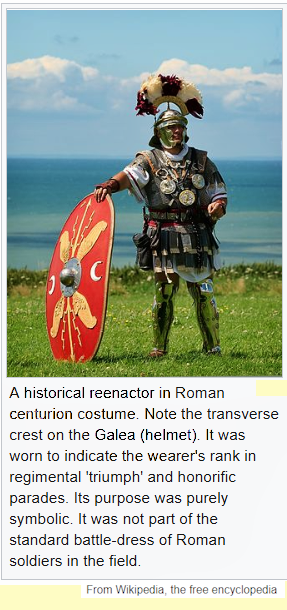
Great Britain was governed by the Roman Empire, from 43 to 410 AD. The Romans vacated the British Isles because Barbarian tribes were attacking other parts of the Empire, and Roman Emperor Honorius decided that the Roman legions in Britain were needed elsewhere. He sent a letter to the people of Britain telling them the soldiers had to leave, and they would have to fight the Anglo-Saxons and invaders on their own. The Welsh, the original Ancient Britons, were left in sole possession of all of England, all the way north to the banks of the Clyde. The Saxons subsequently forced them westward into the mountains of what is now Wales, north to Cumberland and southern Scotland, and into Cornwall.
Large-scale and on-going invasions by various Germanic/Viking/Norsemen peoples suggests that much of what is now England was cleared of its prior inhabitants, pushing them into what is now Scotland, Ireland and Wales,explaining why so much of the DNA of the later English people are inherited from Germanic ancestors. The settlement of England was followed by the establishment of Anglo-Saxon kingdoms in the south and east of England, and later, throughout modern Great Britain.
The Anglo-Saxon settlement of Britain defines the process which changed the language and culture of most of what became England from Romano-British to Germanic. The Germanic-speaking invaders, themselves of diverse origins, eventually developed a common cultural identity as Anglo-Saxons. This process occurred from the mid 5th to early 7th centuries, following the end of Roman power in Britain around the year 410. The settlement was followed by the establishment of Anglo-Saxon kingdoms in the south and east of Britain, later followed by the rest of modern England.
The year 383 saw the Roman general Magnus Maximus strip all of western and northern Britain of troops and senior administrators and continuing to rule Britain from Gaul as emperor.
Rhodri, King of Gwynedd
Rhodri ap Merfyn, or Roderick the Great was king of Gwynedd, in Wales. He was succeeded by at least 4 sons, the youngest of whom was Tudwal Gloff, a man believed to have been too young to have been in the battle of 878 where Rhodri was killed, but who sustained injuries in the “avenging of Rhodri” battle of 881. That battle left him lame and unqualified for any kingship.
The eldest son, Anarawd, succeeded Rhodri as King of Gwynedd. Cadell ap Rhodri held no known lordship or kingship, but probably inherited the manor in Ceredigion owned by his mother’s brother, along with scattered lands in Gwynedd. His death is recorded in ancient documents, but nothing is known of his life. The final son, Merfyn, had a lordship as an appanage of Gwynedd which included Llyn and probably the neighboring lands of Eifionydd and Ardudwy.
The ancient history of the name Vaughn also emerges from these same Welsh chronicles. It was first found in Shropshire where they were descended from Tudor Trevor, the Earl of Hereford, and Lord of Maylors. His wife was descended from Howel Dda, King of South Wales, in 907. Descended was Gronwy, Earl of Herford, through a series of Lords of Maylors and Oswestry. They descended to John Vaughan, son of Rhys Ap Llewellyn, of Plas Thomas in Shrewsbury.
Although Vaughan was mentioned in several different records, it was spelled Vaughan or Vaughn, and these changes in spelling frequently occurred, even between father and son. It was not uncommon for a person to be born with one spelling, marry with another, and still have another on the headstone in his or her resting place. Often times this was the result of the recording scribes’ understanding of how it should be spelled.
The Norman Conquest of Wales was less conclusive than that of England. A testimony to the Welsh fighting spirit is that there are more ruins of castles to the square mile in Wales than anywhere else in the world.
As peace gradually returned to this country, the Welsh, attracted by the economic opportunities, moved eastward into the English cities. The distinguished Welsh Vaughan family name emerged in Shropshire. They remained seated at Dudliston in that shire for several centuries, playing an important role on the English/Welsh border. They branched to Burlton and Plas Thomas, and to Chilton Grove.
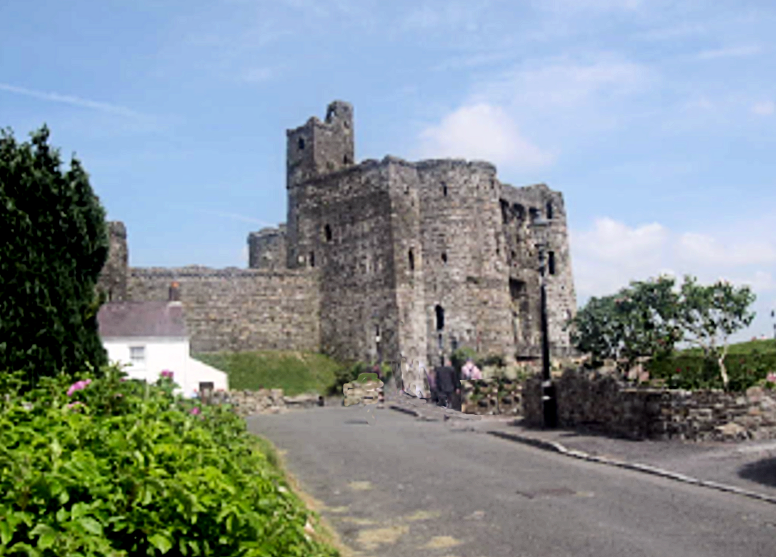
Ruins of Dolymelynllyn Castle
Sir Robert William Vaughan
The chief of the Vaughan line in the 11th century was Sir Robert William Vaughan, who married into the descendants of Meuric, ancestor of the family of Nanau. The Vaughans branched to Merionethshire where they had a distinguished history of political involvement in that shire. They were seated at Dolymelynllyn in that county. Their present seats are at Shoborough House, Humphreston, Nanau, Burlton Hall, the Castle at Builth Wells, and Hallowell in Maine.
Prominent amongst the family during the late middle ages was Sir Robert Vaughan. For the next two or three centuries the surname Vaughan- Vaughn flourished and played an important role in the local county politics and in the affairs of Britain in general.
Religious conflicts followed. The newly found passionate fervor of Cromwellianism found the Roman Church still fighting to regain its status and rights. The power of the Church, and the Crown, their assessments, tithes, and demands imposed a heavy burden on rich and poor alike. They looked to the New World for their salvation.
Many became pirates who roamed the islands of the West Indies such as Captain Morgan. Some were shipped to Ireland where they were known as the ‘Adventurers for land in Ireland’. Essentially, they contracted to keep the Protestant faith, being granted lands for small sums, previously owned by the Catholic Irish. In Ireland they settled in Ulster in the 16th century.
Sir Henry Morgan (c. 1635 – 25 August 1688) was a Welsh pirate, privateer and buccaneer. He made himself famous during activities in the Caribbean, primarily raiding Spanish settlements. He earned a reputation as one of the most notorious and successful privateers in history, and one of the most ruthless among those active along the Spanish Main.
REF: Excerpts from Notes on the Vaughan Families of Wales © by B.H.J.Hughes 1999
Full Text at https://archive.org/stream/VaughanFamilyOfWales/VaughanFamily_djvu.txt
How Surnames Evolved
The family of Vaughan, or Vychan, as it was originally written, is one of the oldest in the British Isles. Vychan is interpreted to mean “young,” or sometimes “small,” or “little” to infer “junior.” This was often used to distinguish the younger of two bearers of the same personal name, typically the son of a father with the same name. As is usual with medieval orthography, a variety of spellings were used for this name in medieval times, such as Vychan, Vachan. Fychan, Bychan.
The Vaughan family of Wales, long before the Restoration of the Stuarts, had accurate genealogies written, and traced their ancestry back for centuries before the Norman Conquest. Skilled genealogists traced their lineage to a Welsh Knight of the famous Round Table in the mythic time of “King Arthur,” and have clearly established their line of descent from the ancient king of Wales, Moreiddig Warwyn of Breconshire and North Carmarthenshire.
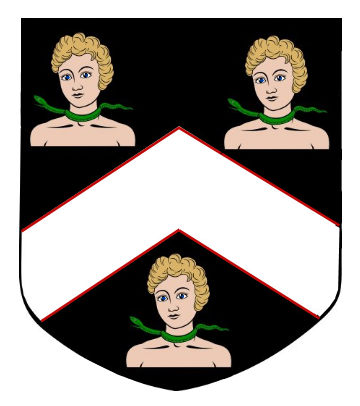
Moreiddig Warwyn Coat of Arms
The family has an unusual coat of arms which is attributed to Moreiddig Warwyn: three boys’ heads with snakes entwined around their necks. The coat of arms was based on an ancient family legend that says when the pregnant mother of Moreiddig Warwyn was resting in the garden, she was frightened by a poisonous Adder snake. Moreiddig was, not long after, born with a prominent mark, resembling the bite of the Adder, on his neck. The legend says that the mark was a sign of God’s protection of him while he was in his mother’s womb.
Before record keeping began, most people only had a first name. As the population increased, people began adding descriptive information, such as John “the smith,” to a person’s name to distinguish him or her from others with the same name. It was common to see John ap John the smith, meaning John, the son of John, the smith. You can understand why “cooper,” “potter,” “baker,” and other trade names became so common, as there would usually be at least one in every settlement.
At first, a surname applied only to one person and not to the whole family. Patronymic surnames are based on the father’s given name. Generally, ap or ab was added between the child’s name and the father’s name. For example, David ap Owen is David “son of” Owen. For a woman’s name, the word ferch or verch (often abbreviated to vch), meaning “daughter of,” was used. There were many exceptions made, including ab to indicate “daughter.”
Patronymic Naming
Wales traditionally has a history of patronymic naming which used your father’s first name as your surname (last name). The practice gradually slowed down in Wales around the early 19th century as wealthier families began to carry the same surname to future generations.
Common classes of Welsh / modern Welsh surnames can be summed up in the following classes:
- 1. Recent settled surnames of Welsh patronymic origin – These originally came from the first name of the father which usually changed from generation to generation under the patronymic system of Wales but now mostly stay the same from generation to generation. So for example the Jones surname comes from the father’s first name of John with an ‘s’ added at a later date as it became more fashionable. Other modern examples of settled surnames of Welsh patronymic origin include Williams, Evans, Lewis, Roberts, Davies and Thomas.
- 2. Purely native Welsh / Celtic and patronymic names – These are also patronymic names that derive from the first name of the father but come exclusively from the Welsh language. Examples include Llywelyn, Morgan, Rhys, Owain, Madog, Tudur, Arthur and Caradog. These can also be descriptive Welsh words rather than just names ,often describing the person, their occupation, or a place. Examples are Llwyd, (meaning grey / brown) Coch (meaning red – developed into Gough), Fychan (small / younger), Mawr (big / large) and Gwyn (white / fair) etc.
- 3. Ap / Ab (‘Son of’) – The same as point 1 and 2 but with an added Ap or Ab to denote ‘son of’ under the patronymic Welsh system , similar to Mac or Mc in Scotland and Ó as in Ó’Reilly and Ó’Connell in Ireland. For example ‘John ap Richard means ‘John son of Richard’. Likewise ‘Dafydd ap Llywelyn’ means ‘Dafydd son of Llywelyn’. This practice has also developed so that, in the case of Richard for example, the ‘ap’ before Richard became abbreviated and shortened in everyday speech over time to become Pritchard. Further examples include Bowen (previously ab Owen) and ‘Puw’ or ‘Pugh’ (from ‘ap Huw / Hugh’)
- In the case of daughters, ap / ab is often replaced by ‘ferch / verch’ (daughter of / girl) instead. So a daughter of John who is named Nest would become Nest ferch John (sometimes also spelt ‘verch’). Later on, ap was often also used in the case of daughters, so Nest ap John can also be seen for example. All of these except the ‘ferch / verch’ naming system can still be seen in use today.
THE FIRST VAUGHN SURNAME
Ednyfed Fychan Ap Cynwrig
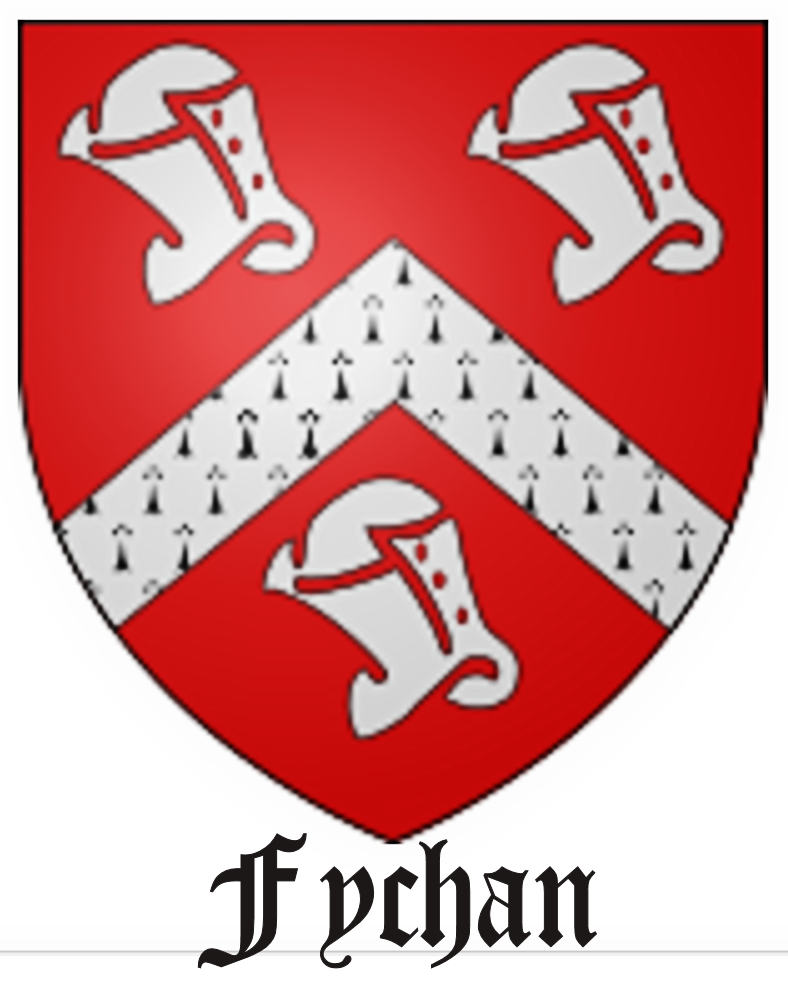
Ednyfed is believed to have been the first person to have adopted Fychan (Vaughan) as a surname. And, it is possible that he thought he was adopting the surname “Young, Younger, Junior, Small or Little.”
Ednyfed Fychan ap (son of) Cynwrig (c. 1170–1246), called by some Ednyfed the young, was a Welsh warrior who in 1215 became seneschal (Chief Councilor or Prime Minister) to the Kingdom of Gwynedd in Northern Wales. He was appointed to the position by Llywelyn the Great, and later served under Llywelyn’s son Dafydd ap Llywelyn. He was a descendant (9th in descent) of Marchudd ap Cynan, Lord of Rhos, Lord Protector of Rhodri Mawr, King of Gwynedd and an ancestor of Owen Tudor, and thereby of the Tudor dynasty.
Ednyfed was married twice, first, it is believed, to Tangwystl Goch ferch Llywarch of Menai, or Rhos, the daughter of Llywarch ap Brân, then, secondly, to Gwenllian, daughter of the prince Rhys ap Gruffydd of Deheubarth. Gwenllian died in 1236. By Ednyfed’s first marriage he had six children, and six by his second marriage, and another which was illegitimate by an unknown woman.
Ednyfed is said to have first come to notice in battle, fighting against the army of Ranulph de Blondeville, 4th Earl of Chester, who attacked Llywelyn at the behest of King John of England. Ednyfed cut off the heads of three English lords in battle and carried them, still bloody, to Llywelyn, who commanded him to change his family coat of arms to display three heads, in memory of the feat.
Ednyfed continued as seneschal in the service of Llywelyn’s son, Dafydd ap Llywelyn, until his own death in 1246. Ednyfed was buried in his own chapel, now Llandrillo yn Rhos Church, Llandrillo-yn-Rhos (Rhos-on-Sea), North Wales. Ednyfed’s son, Goronwy, gave rise to the Penmynydd branch of the Vaughan family in Anglesey, from whom
Owen Tudor, and later, Henry VII were descended.
The Vaughan family was, in the Welsh language, named Fychan. Gruffydd Fychan was married to Katherine, daughter of Maredudd ap Tudor. Their son, Hugh Fychan, moved to Carmarthenshire in 1485, and married Jane, daughter of Morris ab Owain, Steward, of the Lordship of Kidwelly and Receiver of the Commotes of lscennen and Carnwyllion.

Hugh Fychan was appointed Forester of Kidwelly and by 1492 was Gentleman Usher at the court of Henry VII, his cousin. In 1532, Hugh Fychan, or Vaughan as he was now known, was appointed Keeper and Receiver of lands in Kidwelly confiscated by Henry VIII from Rhys ap Gruffydd of Dynevor.
The family home, in those days called “the family seat,” was Cwrt Bryn y Beirdd, a 14th century unfortified mansion opposite Carreg Cennen Castle in the Commote of lscennen. Hugh and Jane had one son, John Vaughan.
Thomas Cromwell
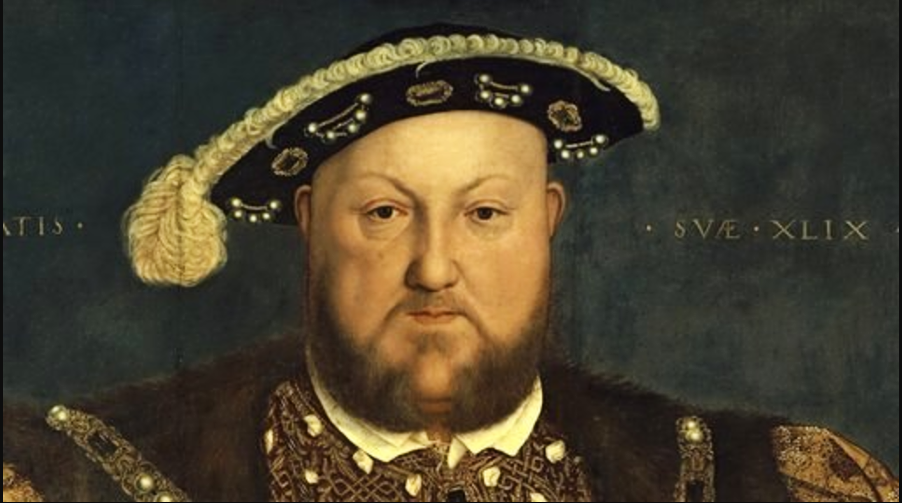
Thomas Cromwell, Pretender to the British Throne
Thomas Cromwell, 1st Earl of Essex KG PC (c. 1485 – 28 July 1540) was an English lawyer and statesman who served as chief minister to King Henry VIII of England from 1532 to 1540. Cromwell helped engineer an annulment of the king’s marriage to Queen Catherine of Aragon so that Henry could lawfully marry Anne Boleyn. Henry failed to obtain the Pope’s approval for the annulment in 1534, so Parliament endorsed the king’s claim to be Supreme Head of the Church of England, giving him the authority to annul his own marriage.
During Cromwell’s rise to power in the new church, he made many enemies, including the Vaughans, and his former ally Anne Boleyn. He later fell from power, after arranging the king’s marriage to German princess Anne of Cleves, but Henry found his new bride unattractive and it turned into a disaster for Cromwell, ending in an annulment six months later. Cromwell was executed for treason and heresy on Tower Hill on 28 July 1540. The king later expressed regret at the loss of his chief minister.
King Edward of Windsor
Walter Seys was a trusted official of Edward III (Edward of Windsor), and was involved with the responsibility of sorting out the estates of John Hastings, Earl of Pembroke (a minor), after the execution of Roger Mortimer, who had previously been trustee.
The early part of the 14th century was a very turbulent time in the history of Britain. The influences and events of the day affected even the most distant parts of the country. Walter de Seys, founder of the one of the Vaughan families, that of the Welsh Marches, and Pembrokeshire, founded the family fortunes and played an influential part in the events of the time.
After the defeat of the Earl of Lancaster’s rebellion in 1322, Edward II, age 38, who was homosexual, became totally dominated by the Despensers, father and son. Sir Hugh, the younger, took advantage of his position to extend his lands into a territorial lordship covering most of South Wales. This was regarded as a threat by those holding land in the Marches. The estate of the Earl of Pembroke is one example.
Aymer de Valence
Aymer de Valence, 2nd Earl of Pembroke (c. 1275 – 23 June 1324) was a Franco-English nobleman. Though primarily active in England, he also had strong connections with the French royal house. One of the wealthiest and most powerful men of his age, he was a central player in the conflicts between Edward II of England and his nobility, particularly Thomas, 2nd Earl of Lancaster.

Pembroke was one of the Lords Ordainers appointed to restrict the power of Edward II and his favourite Piers Gaveston. His position changed with the great insult he suffered when Gaveston, as a prisoner in his custody whom he had sworn to protect, was removed and beheaded on the instigation of Lancaster. This led Pembroke into close and lifelong cooperation with the King.
One time adviser to the king, he died in 1324 leaving no children. His sister Isabel de Valence was married to John de Hastings, and their son Laurence de Hastings, became heir and the new Earl of Pembroke but, because he was a minor, the estate was held by the Crown.On April 28, 1325, Edward II granted custody of all the estates belonging to Laurence, the son and heir of John de Hastings, until the said Laurence should come of age, to Hugh Despenser the younger.
Hugh Despenser the younger
Sir Hugh the elder, had been made Earl of Winchester. He caused “the Queen to be hated and put on livery.” Queen Isabella seeing the warning signs, and believing that her position and possibly her life were threatened, agreed, when it was proposed by the papal nuncios, that she would undertake a peace mission, to reconcile her husband and her brother and obtain a settlement of the vexing question of who was the overall ruler of Gascony.
On 9 March 1325 she, with most of her household, sailed for France, where, as a mediator, she proved very effective. Part of the agreement she concluded was that Edward II should, in person, do homage to Charles IV (of France), for those lands held by Edward II in France.
The Despensers were against Edward traveling to France, rejoining the Queen, or in any way leaving their sphere of influence, and on 24 August, Edward II declared himself unfit to travel. He adopted the plan that Prince Edward should be invested with the duchy of Gascony and the county of Ponthieu and perform homage in place of his father. Accordingly the young prince sailed to France and did homage to the French king.
During the time they were in France, Edward II had his son and wife proclaimed as traitors both to him and his kingdom. Queen Isabella in turn vowed not to return to the court of Edward II as long as Hugh le Despenser the younger was there.
Supported by the count of Hainault, in return for the marriage of his daughter, Philippa, to the young Edward, the Queen, her son, the Earl of Kent, Roger de Mortuo Mari (Roger Mortimer), and the brother of the count of Hainault, with a small supporting force, invaded England, landing at Orwell in Suffolk on September 24 1326 and headed for London. Many of the Marcher lordships hated Edward II and supported Edward III.
Edward II was then in the west country, and the chronicle records that he and Sir Hugh the younger fled across the Severn from Bristol towards Morgannwy. Sir Hugh the elder, who commanded at Bristol, was forced by the burgesses to yield the town without resistance, was seized, “tried “sentenced to be “drawn for treason, hanged for robbery, beheaded for misdeeds against the Church.”
Sir Hugh the younger, with Simon Reding, a clerk, and king Edward II headed into Wales, trying to escape to Lundy Island, from where they might have been able to get a boat to Ireland, but storms in the Bristol Channel prevented this. Instead they were forced to head further west, with the hope of gaining support from some of Hugh le Despenser the younger’s estates.
On 16 November they were captured at Neath Abbey. The next day Simon Redding was drawn and hanged, and Hugh the younger was taken to Hereford, where on 24 November he was “tried” and sentenced to be “drawn for treason, hanged for robbery, and beheaded for misdeeds against the Church, carried out forthwith.”
It is interesting that he was taken to Hereford where Walter de Seys had influence. He had risen to national prominence as royal chamberlain and a favourite of Edward II of England, but a series of subsequent controversies eventually led to his being hanged, drawn and quartered.
Edward II Deposed
Edward II was taken to Kenilworth and was forced to abdicate in January 1327. His son was proclaimed King Edward III, at the age of fifteen. The deposed Edward II was removed from Kenilworth, in April 1327, to Berkeley Castle were at least two attempts were made to rescue him.
According to some accounts, he was murdered on 21 September 1327 by being pierced in the rectum with a white hot lance, it has been suggested, on the orders of Roger Mortimer. 14th century court historian Froissart wrote that Edward’s favorite, Hugh le Despenser the younger, “he was a sodomite.” According to Froissart, Despenser’s penis was severed and burned in his execution as a punishment for his sodomy and heresy.
On the death of Hugh Despenser the younger, control of the estates of Laurence de Hastings (who was still a minor) passed to Roger Mortimer.
Roger Mortimer
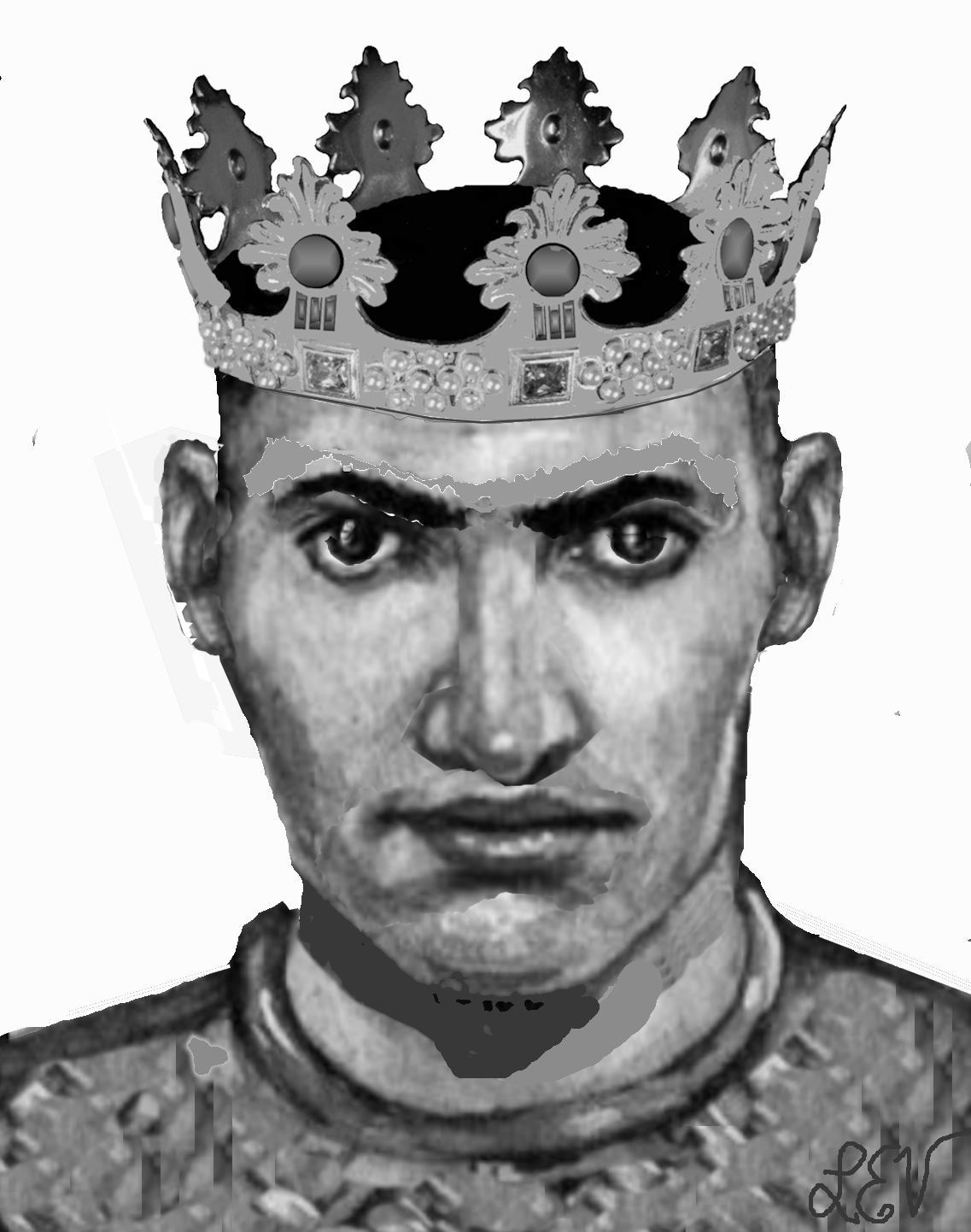
Edward III, as a fourteen year old minor, was under the influence of his mother Queen Isabella and her lover, Roger Mortimer. Mortimer had been imprisoned in the Tower of London in 1322 for having led the Marcher lords in a revolt against King Edward II in what became known as the Despenser War.
Mortimer later escaped to France, where he was joined by Edward’s queen consort Isabella, whom he took as his mistress. After he and Isabella led a successful invasion and rebellion, Edward II was subsequently deposed. Mortimer allegedly arranged his murder at Berkeley Castle.
For the next three years, Mortimer was de facto ruler of England before being himself overthrown by Edward’s eldest son, Edward III at the age of 18. In October 1330, with the encouragement and support of many of the nobility, Edward III took over the reins, of government.
His mother Queen Isabella and her lover, Mortimer, were arrested. Mortimer had been caught in the old king’s bedroom at night. Accused of illegally assuming royal power and other crimes, Mortimer was executed by being drawn and quartered, his body hung, and his heir dispossessed. Isabella was banished to Castle Rising.
Queen Isabella
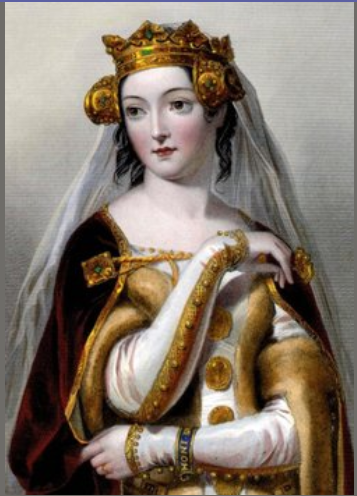
Isabella of France (1295 – 22 August 1358), sometimes described as the She-Wolf of France, was Queen of England as the wife of Edward II, and regent of England from 1326 until 1330. She was the youngest surviving child and only surviving daughter of Philip IV of France and Joan I of Navarre. Queen Isabella was notable at the time for her beauty, diplomatic skills, and intelligence.
As the former mistress of the power hungry Roger Mortimer, Isabella had been instrumental in the horrific murder of her husband, Edward II, in 1327. It is a widely held misconception that her son imprisoned her at the castle in 1331. Nothing could be
further from the truth.
Not only did Isabella live in regal splendor here, but she was also free to move with her retinue between her various residences as befitted a lady of her social standing. She died at her castle in Hertford on August 23, 1358, and was buried in the monastery of the Greyfriars by Newgate in London.
Edward III
Edward III (13 November 1312 – 21 June 1377) was King of England and Lord of Ireland from January 1327 until his death; he is noted for his military success and for restoring royal authority after the disastrous and unorthodox reign of his father, Edward II. Edward III transformed the Kingdom of England into one of the most formidable military powers in Europe. His long reign of 50 years was the second longest in medieval England (after that of his great-grandfather Henry III) and saw vital developments in legislation and government
Edward was crowned at age fourteen after his father was deposed by his mother, Isabella of France, and her lover Roger Mortimer. At age seventeen he led a successful coup d’état against Mortimer, the de facto ruler of the country, and began his personal reign. Edward III was a temperamental man but capable of unusual clemency. He was in many ways a conventional king whose main interest was warfare. After a successful campaign in Scotland he declared himself rightful heir to the French throne in 1337. This started what became known as the Hundred Years’ War.
Walter de Seys
Among those whose support in Wales was crucial to king Edward III was that of Walter de Seys. He held many important posts in Wales and was involved in the taking of inventories of the estates which had been held by Roger de Mortuo Mari (Roger Mortimer) after his death.
Roger Ifank (or, young Roger), lord of Canterseliff and Dechryd, married Jane, daughter and sole heir of Sir Ralph Baskerville of Dechryd, in Radnorshire, and her mother, daughter and coheir of Sir Miles Pitcher, of Ysketthrock, by whom he had issue, Walter Seyes, jokingly called Walter Sais (English Walter) because of his constant living in England, and daughter Jane, wife to Sir Baldwin Whiting.
Walter’s son, Roger Hen of Bredwaredine, Esquire, lord of Cantersciff, married Margarett, daughter to Walter Devereux. lord Ferrers of Charley, a famous and influential family who later became the Earls of Essex, by whom he had issue, Sir Roger Vaughan, of Tretower, and a daughter, Janet, wife, to Thomas Griffith ap Owen Gethin, and a daughter, name undiscovered, who married Thomas Lewis of Tfrwdgrech.
Walter de Seys also had a son called Roger Vychan whose mother was Matilda verch Ieuan ap Rees. He held lands in the lordship of Talgarth.
The Vaughan family had accumulated property at Llechryd and Cwn Du before their ancestor, Walter de Seys,5 fought against Robert the Bruce. This Vaughan family of Bredwardine, Herefordshire, was the main branch of the Vaughans who traced their descent, through Walter Seys, to Moreiddig Warwyn (to whom the origin of the family’s coat of arms, three boys’ heads with a snake entwined about their necks, was ascribed), and thence to Drymbenog ap, lord of Brycheiniog.
Walter Sais ap Roger Vychan of Llechry
| Son | Himself | Parents |
| Rosser “Hen” Vaughan | Gwallter Sais ap Rhosser | Rhosser fychanap Rhosser Fawr &Joyce f. John Walbyf |
Walter Seys won fame and fortune fighting for Edward III. In the pedigree books, he is said to have married the heiress of Sir Walter Bredwardine, and to have taken up residence at Bredwardine, followed by his son, Rhosier ‘Hen,’ who married a daughter of Sir Walter Devereux, and his grandson, Roger Vaughan, who married Gwladys, daughter of Dafydd Gam.
Walter Seys’ children by Florence:
[1] Roger Hen of Bredwardine (d 1415) m Ann, da. of Sir Walter Devereaux[3]
- [1] Sir Roger Vaughan (d 1415) m Gwladus f. Sir Dafydd Gam (d 1415)[3]
- [2] Gwladus f. Roger Hen, m Jenkin ap Hywel ap Gwilwm[5]
- [2] Angharad married Philip Walbyf
Walter Seys’ children by Mallt f. Ieuan ap Rhys
- [1] Roger Fychan
The Welsh Longbow

English and Welsh longbow archers formed most of Henry’s army
Walter Seys showed his mettle in battles in Scotland, where the prowess of the Welsh archers first came to the fore, and then again in the Wars in France, where the Welsh archers proved so valuable at Crecy in 1346, and later under Henry V at Agincourt Friday, 25 October 1415 that war tactics were completely changed.
The Agincourt battle is notable for the use of the English longbow in very large numbers, with English and Welsh archers forming most of Henry’s army. The battle is the centerpiece of the play Henry V by William Shakespeare. Many of the 7,000 Welsh archers were mounted, and thus far more mobile than foot soldiers, dismounting to fire at the enemy. They were paid 6 pence per day, which was a very high rate for the time.
The New World
America held many attractions for those who felt adventurous or desperate. They sailed across the stormy Atlantic aboard tiny sailing ships built for 100 passengers, but sometimes carrying 400 or 500. The overcrowded ships were to become known as the “White Sails.” They sometimes spent two months at sea, while wracked with disease. Those that survived the elements were often stricken with smallpox, dysentery and typhoid, sometimes landing with only 60 to 70% of the passengers they started with.
In North America, one of the first migrants which could be considered a kinsman of the Vaughn family or having a variation of the family surname spelling, were: George Vaughan who settled in Maine in 1629; Patrick Vaughan settled in Virginia in 1635; Elizabeth Vaughan settled in Virginia in 1654; John Vaughan settled in Virginia in 1636; Christopher Vaughan settled in Virginia in 1652; Rowland Vaughan settled in Virginia in 1635; Lewis Vaughan settled in Virginia in 1636; John Vaughan from Milford Haven settled in St. John’s Newfoundland in 1825. William Vaughan was a planter in Mulleys Cove, Conception Bay, Newfoundland in 1844.
While researching the Vaughan Coat of Arms, the most ancient recording and grant of Arms was a Black Chevron Between Three Silver Fleur de lis. Many Vaughan/Vaughn family branch Coats of Arms which were granted down through the ages may also be appropriate to the name. The Vaughan Crest is; An arm holding the fleur de lis. The age honored family motto for this distinguished name is; “Non Revertar Inultus,” (I will not return unavenged).
The modernized version of the official Vaughn crest, became more conservative over time, and placed chivalry and knighthood more in the background. Nobility of birth is no longer required. Nobility of spirit is more important.
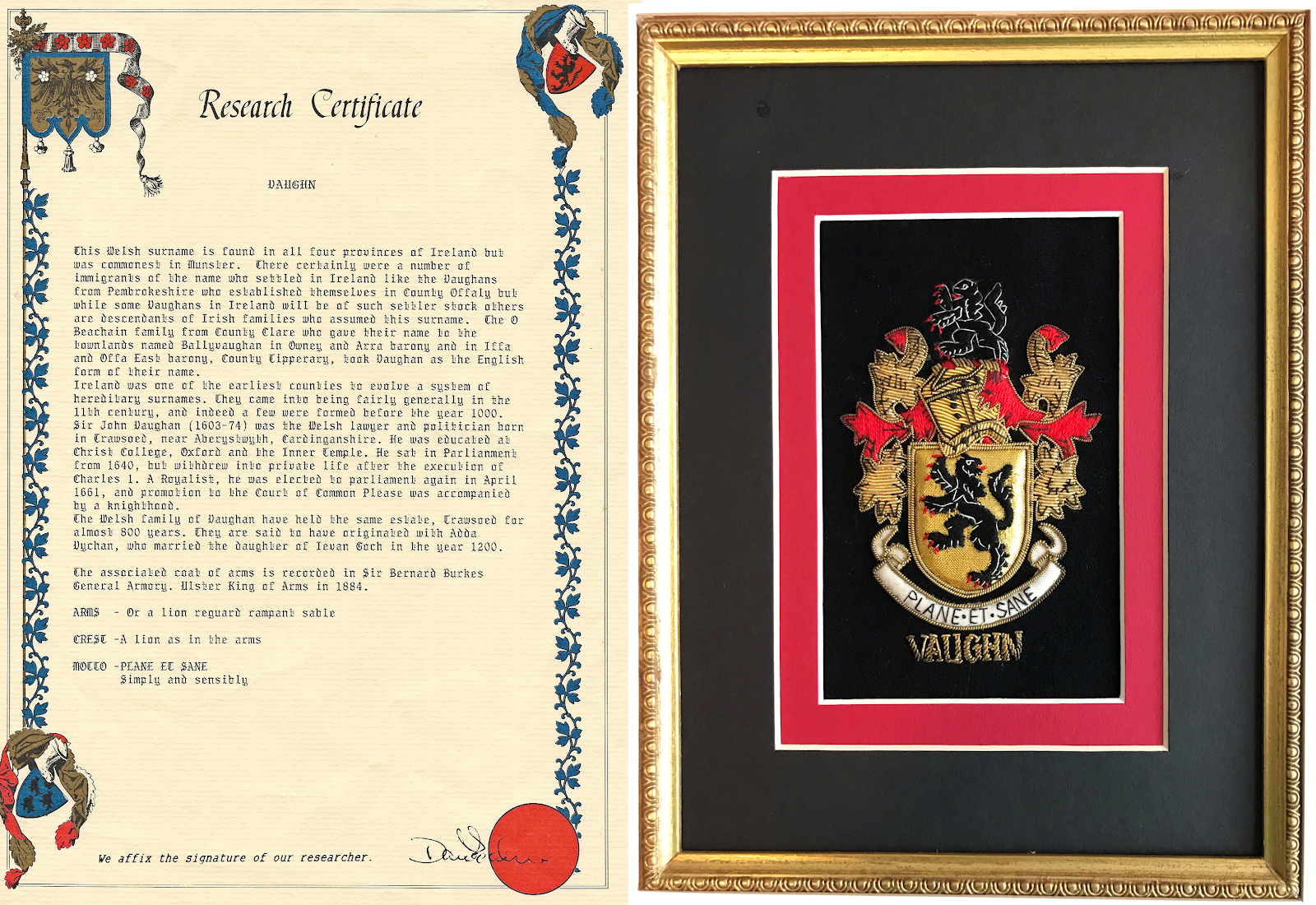
While living in Manchester, England in the mid 1980s, my brother, David Kent Vaughn, had a commercial genealogy shop there research our Vaughn family’s background, and the latest recorded version of the Vaughn family crest, which shown here, registered in Ireland, with the certificate of authenticity.
The certificate reads (with some minor spelling corrections): This Welsh surname is found in all four provinces of Ireland but was commonest in Munster. There certainly were a number of immigrants of the name who settled in Ireland like the Vaughans from Pembrokeshire who established themselves in County Offaly but while some Vaughans in Ireland will be of such settler stock others are descendants of Irish families who assumed this surname.
The O’Beachain family from County Clare who gave their name to the townlands named Ballyvaughan in Owney and Arra barony and in Illa and Offa East barony, County Tipperary, took Vaughan as the English form of their name.
Ireland was one of the earliest countries to evolve a system of hereditary surnames. They came into being fairly generally in the 11th century, and indeed a few were formed before the year 1000. Sir John Vaughan (1603-74) was the Welsh lawyer and politician born in Trawsgoed, near Aberystwyth, Cardiganshire. He was educated at Christ College, Oxford and the Inner Temple. He sat in Parliament from 1640, but withdrew into private life after the execution of Charles 1. A Royalist, he was elected to parliament again in April 1661, and promotion to the Court of Common Pleas was accompanied by a knighthood.
The Welsh family of Vaughan have held the same estate, Trawsgoed for almost 800 years. They are said to have originated with Adda Vychan, who married the daughter of Ievan Goch in the year 1200.
The associated coat of arms is recorded in Sir Bernard Burkes General Armory, Ulster King of Arms, in 1884.
- ARMS – Or a lion reguard (on guard) rampant sable
- CREST -A lion as in the arms
- MOTTO – PLANE ET SANE (Simply and sensibly)
Dave’s Review
I asked my brother, Dave, to review the above introduction, and he replied, “My only edit might be something to the effect of Vaughan was not differentiated from Vaughn as Vaughan was accepted as the “correct” spelling. To me that means that even if a family used Vaughn, it likely would have been recorded as Vaughan by historians. To a certain extent, Vaughn was considered as misspelled, low class or rebellious which seems about right for our clan.”
Trawsgoed Estate
From Wikipedia.org, the free online encyclopedia: The Trawsgoed Estate (Welsh for “Crosswood”) is an estate located eight miles east of Aberystwyth in Ceredigion, Wales (Coordinates: 52.340252°N 3.953864°W), and in the community of Trawsgoed that has been in the possession of the Vaughan family since 1200.

Seat of the Trawsgoed estate, which extended over 22 Cardiganshire parishes
The family are descended from Collwyn ap Tangno, founder of the fifth noble tribe of North Wales, Lord of Eifionydd, Ardudwy, and part of Llŷn, who had his residence on the site of Harlech Castle.The land falls within the ancient parish of Llanafan, in the upper division of the hundred of Ilar. The Trawsgoed estate extended over 22 Cardiganshire parishes, including Llanafan. The community of Trawsgoed had a population of 989 in 2011.
History of Trawsgoed Ownership
The estate and mansion of Trawsgoed came into the Vaughan family by the marriage of Adda Fychan with Tudo, daughter and heiress of Ifan Goch of Trawsgoed, ‘Evan the Red’.The founder of the modern estate was the parliamentarian and lawyer, Sir John Vaughan, who was made Chief Justice of the Common Pleas by Charles II. It was Sir John Vaughan who acquired from the Earl of Essex much of the former monastic lands of the Cistercian abbey Strata Florida. At the same time further land was added to the estate through his marriage to Jane Stedman, daughter of John Stedman of Ystrad Fflur and Cilcennin.
The estate has been passed down in the landed family from father to son in a direct line since it was acquired by marriage in 1200. The Vaughans are one of the few aristocratic families who have retained possession of a house since first taking it on in the Middle Ages.Trawsgoed became an estate in the English sense of the word in the 16th century. Strata Florida Abbey, in the centre of Wales, was given to the 1st Earl of Essex to broker during the English Reformation and dissolution of the monasteries, and he sold much of it to the Stedman family.
Sir John Vaughan married the Stedman heiress and his brother, Henry, her sister. So almost all the abbey estate was taken over by the Vaughans. In 1695, John Vaughan of Trawsgoed, the grandson of Sir John Vaughan, was created Viscount Lisburne in the peerage of Ireland. during the Civil War he married Malet, daughter of the poet and courtier, the Earl of Rochester, and granddaughter of the Cavalier, Sir Henry Wilmot, 1st Earl of Rochester, the victor of the Battle of Roundway Down.
The Vaughan family was granted the title Earl of Lisburne in 1776 and remained at Trawsgoed mansion over successive generations. The family at one time owned estates in Northumberland and at Mamhead in Devon.
Trawsgoed Grounds
In 1873, the Vaughan’s estate acreage at Trawsgoed was the largest in Cardiganshire at 42,666 acres. The Vaughan family has for many years worshiped at St Afan’s Church, Llanafan, that lies within the estate.
Trawsgoed Mansion
Trawsgoed Mansion is a 17th-century country house, also known as Crosswood Park, formerly the seat of the Earl of Lisburne. It was Ernest George Henry, the 6th Earl of Lisburne, who added the 50-room Victorian wing to the old Georgian mansion and built the summerhouse, squash and tennis courts and the ornamental fountain. He also had the library ceiling painted in the style of those at Windsor Castle. The house eventually included seventy rooms, a summerhouse, gardens with rare Chilean and Himalayan tree species that thrive in the mild moist climate of coastal Wales, the remains of a small Roman fort adjoining the grounds, fountain, stable block, lodge house, and unencumbered view of the Cambrian Mountains.
The Vaughan family today owns over 5,000 acres of the original estate that includes upland pastures, Common Land, farmland on and adjoining Cors Caron, and the Lisburne (Lead) Mine, second largest in Britain and one of the most profitable in all of Wales.
The last remaining Vaughan member to be in residence at the house was the Honourable John Edward Malet Vaughan, born 3 Oct 1952. He is the youngest child of John David Malet Vaughan, 8th Earl of Lisburne and Shelagh Macauley. Formerly a Director of Savills, John Vaughan is the Managing Director of Trawsgoed Estates, Ltd at this date.
Reference:
Excerpts from “Reminiscences and Genealogical Record of The Vaughan Family of New Hampshire by George E. Hodgdon” Supplemented by an Account of The Vaughans of South Wales, Together With Copies of Official Papers Relating To The Vaughans of New Hampshire, Taken Out of The English Colonial Records In London by Thomas W. Hancock, Copyright, 1918, by R.C.Shannon
From Mr Hodgdon’s APPENDIX in this publication are interesting notes that clarify some of the ancient names for ancestors whose names have been Anglicised by later genealogists, and give us some cultural insights on other matters relating to the family:
Descents of the Vaughans of Bredwardine and South Wales
From Drym ap Msenarch, called Drum Bennog:
- Drym ap Msenarch = Gwenllian, dau. of Iestyn Gwrgan, Prince of (lord of Cantreselyff Glamorgan. (= is author’s abbreviation for “married”)
(Brecknock Family)
- Moreiddig Warwyn = Elen, dau. of Rhys, Prince of all South Wales: (circa 1060).
- Llywelyn = Joan, dau. of Cyhylayn, lord of Ystrad-Yw.
- Sisyllt = Lucy Madog, dau. of Gr. ap Madog.
- Howell = Gwladis Vychan, dau. of Morgan Vychan, lord of Ayron.
- Rhosser Vawr = Joice WalbiefT, dau. of Sir Wm. Walbieff, lord of Llechryd. of Cantreselyff.
- Rhosser Vychan = Baskerville, dau. of Sir Miles Baskerville.
(Vaughan Family)
- Gwallter Vychan = Florence Bredwardine, dr. of Sir Walter (Walter Vaughan.) Bredwardine. Called ” Gwallter Sais (or Seyes),” because he lived so much in England.
- Rhosser Hen = Ann Devreux, dau. of Sir William Devreux.
- Sir Roger Vaughan = Gwladis Gamine. (of Agincourt, France.)
About Genealogists
Genealogists, in England and Wales, were of two Orders — the Official or Professional Herald of the ” College,” and the Amateur, or collector of antiquarian and historical lore. The Heralds of the College of Arms or their deputies made formal visitations of the counties of England and Wales to collect and record family pedigrees. These ” visitations ” were made at (irregular) intervals during the reigns of Elizabeth and James I, in whose reign they ceased.
The other Order may be said to be always on the ground. Many of the Welsh “Bards” were, from ancient times, professional in genealogy and heraldry ; they were termed ” Herald Bards,” and were the Laureate Poets of the several lords in the Principality. Upon the question of ” Descents,” they said:
There are Five causes that descents should be kept; — 1. To make honorable marriages. 2. To make and show lawful title to land . 3. For Office in the State. 4. Chivalric honor and the avenging of wrongs. 5. To claim “Arms” from the King’s Herald when called to the King’s aid to the war — by exhibiting the pedigree that the Claimant was not plebian. — Ancient Welsh MSS.
The records of the Second Order of Genealogists are as reliable as those of the first named, and we have still their manuscripts well preserved, in the original autographs; bearing in mind that the work of both are not without their defects, from a variety of causes, of which the following may be noted:
Where the families of the ancient aristocrats were large (as were the Vaughans) the parents’ old mansion house was felt to cramp the wants and ambition of the children, and, in the majority of cases, the incomes from estates would be found insufficient to fortune all suitably.
Consequently, the younger sons who failed to make for themselves such marriages as would bring them into new fortunes in landed estates left the country homes for the cities to enter the learned professions, or took to foreign adventure, or joined the great trading companies, or entered the King’s service.
Some articled themselves as apprentices to leading merchants, many of whom were merchant princes in wealth and influence, or to leading trade citizens in London and elsewhere. The daughters also became widely divided by their marriages. To these, add the social disturbances in the reigns of the Stuarts, which especially helped the dispersions into the many diverging roads of fortune.
So the several genealogists, when they went to collect their facts and to count up the members of the families, met with the difficulties incident to and attendant upon such dispersions, and necessarily there would result various degrees of completeness and fullness in the several records made by the different hands. Pedigree charts or tables, in consequence of these incidents, necessarily require to be completed and filled by every document accessible, and the same to be afterwards collated.
Lineage Court Inquiry
Note: Below is an abstract from British Court, in which the lineage of Major William Vaughan is verified. The original court document was written in Latin, and translated into English by Mr. Hodgdon.
Abstracts in English of two of these inquisitions (which are in Latin) will be given, relating to the Vaughans; and therein will be seen important particulars for the special pedigree, establishing dates, localities, and confirming the relationships stated by the genealogist.
MAJOR WILLIAM VAUGHAN was the son of George Vaughan, Gentleman and Yeoman, of South Harting, in the County of Sussex, England.
George Vaughan, according to an entry of the year 1695, in an old family bible (discovered by George E. Hodgdon, Esq., attorney, of Portsmouth, in New Hampshire, U. S. A., in the possession of one of the Vaughan descendants), was ” the son of Sir Roger Vaughan, a native and resident of Glamorganshire, Wales,” and was ” baptized the 10th of April, 1615.”
He settled in South Harting, and the entries relating to his children, and to his own death, in the said Bible agree with those in the Harting parish registers. They will be referred to in a few paragraphs further on. Here I must compliment Mr. Hodgdon in high terms for the enthusiasm he has shown, the discrimination evinced, and the success he has achieved in his labors in tracing out the connections of the Vaughan families in America.
The only point of doubt in the entry is whether the said Roger Vaughan was in possession of the title of ” knight.” This point is specially doubtful, for the pedigrees given by the genealogists of the time call him ” Roger Vaughan, Esquire,” and he is not in the list of created knights.
He is placed by the pedigrees as of Brecknockshire, but the Brecknockshire and Glamorganshire estates of the Vaughans were intimately blended together. The Bible entry is probably correct in reference to this point, but as to the “knighthood,” there may be some doubt. At the same time, it is just possible that, as he was the eldest son,* which is probable, he may have been ” popularly ” called ” Sir Roger ” among his friends and neighbors in his lifetime, since there had been so many of the members of the family, and in that direct line, knighted by the King.
The General Pedigree of the Vaughan Family
(1) Such extraordinary expansion in the various branches, and within a few generations only, that there would become an absolute necessity for the younger members to seek out new locations ; and,
(2) A tendency among themselves to centralize into groups around these new localities. Falstone and Bishopstone became of importance to the Brecknockshire and the Glamorganshire Vaughans in this respect; there, and thereabouts, they made for themselves new homes, new friends, new relationships. Some of them who had entered into ” Holy Orders ” obtained good benefices in that district, and became cathedral dignitaries in the diocese of Winchester.
Sir Walter Vaughan, knight (son of Thomas Vaughan, the original purchaser), was the owner of Falstone at the time, and there are evidences that he took special interest in his kindred in South Wales. This affection for kindred, no doubt, drew his cousin George Vaughan thither, whence, subsequently, he found a settlement in Sussex, where we find these memorials about him.
South Harting is a very pretty village, lying under the shelter of the famed South Down hills, and. quite on the border of Hampshire, and only a few miles from Portsmouth. It was here that Mr. George Vaughan settled after his marriage with a Miss Boxall.
Here we discover also a small colony of Welsh people located, at the same time — Bennetts, Edwards, Ellis, Jones, Powells, Richards and other Vaughans, whose ” times ” are recorded in the parish registers. Marriages had taken place at an earlier date between the Bennetts, the Powells and the Vaughans in South Wales. Of the Bennetts of South Harting sprang the famous Thomas Bennett, Lord Ossulstone, whose record of burial is entered in the Register, in 1703.
Mr. George Vaughan’s marriage to Miss Mary Boxall took place in 1639, according to the old Bible entry. But of what family she was descended can not be ascertained as yet. There were families of that name living in South Harting. For in the parish Register is this entry: “Thomas Boxall* was buried — 1710.” (This is the only entry of Boxall in the Register of this Parish.— T. W. H.)
Their “marriage,” however, is not recorded in the register of this parish ; and the probability is that they were married in the parish in which the young lady resided, coming afterwards over to South Harting to live, which must have been pretty soon after the event. There were Boxalls in the adjoining county of Hampshire; there, most probably, she resided.
Their eldest son, William, was born in January, 1640, as will be shown by the extracts to be presently given.
Mr. George Vaughan died in 1699, and the parish Register gives this entry, that he was “Buried the 5th April, in that year. He was 84 years of age at the time of his death, and must have been about 54 years a widower. Being an old man, and lonely during so long a period, and all his children dead, save one, but who was very far off — in the “New World” — this in those days to an old man’s mind would mean a great deal, that is ” as good as dead,” to him. He bequeathed all his property, real and personal, to his neighbors — who perhaps were in some way related by kinship to him — the Bennetts. They, no doubt, were kind and attentive to him in his solitude and last illness. His will was proved in the Prerogative Court of Canterbury on the 4th of July, 1699. (See p. 144)
One is strongly led to believe, by the words of the will — by the repetitions, which are more than are commonly used in the recital of ” revoking ” of ” previous ” wills, that there existed an earlier one, which earlier one we may also well believe, would he in favor of his daughter Joane, who died a few years before him — in 1694 ; and perhaps would have bequests in favor of his son, who, as we shall see, was at the time a wealthy and an important person in the New England of America.
But he was in London, in the “old country,” in 1685; perhaps he had visited it even before that — (and again in 1703) on urgent matters relating to his ” Plantation rights,” which were threatened. We may well believe that he visited his aged parent, and from him refreshed his memory with particulars of the Welsh family history, and which accounts are at the present time interesting matters of tradition and history among the descendants in New England. South Harting is distant from London about 73 miles, and in those days this was more than a whole day’s journey, even with the quickest means of travelling.
The Will of George Vaughan, Esquire
Dated 5th Jany. 1698-9
In the Name of God, Amen ; the fifth day of January in the year of our Lord God 1698-9, I George Vaughan of South Harting in the County of Sussex, Yeoman, being very sick and weake in body, but of perfect minde and memory, thanks be to God, therefore calling into mind the mortality of my body and knowing that it is appointed for all men once to dye, doe make and ordaine this my last Will and Testament,
that is to say principally and first of all I give and recommend my soul into the hands of God that gave it, and for my body I comend it to the Earth, to be buried in a Christianlike and decent manner at the discretion of my Executor, Nothing doubting but at the general Resurrection I shall receive the same againe by the mighty power of God; and as touching such worldly estate, wherewith it has pleased God to bless me in this Life, I give, devise and dispose of the same in the following manner and forme;
Imprimis, I give and bequeath to William Bennett my house in South Harting, late in the possession of Edwards, paying unto John Bennett the sum of Ten Pounds of lawful money of England, to be paid in the terme of one year after my decease, with a greate ffiagon and pewter dish;
Item the Horse mill in Petersfield between Mary Bennett, Elizabeth Bennett, Anne Bennett, and Frances Bennett to be equally devided among them;
To Elizabeth Bennett two Cloth stools and a side cupboard;
To Frances Bennett, I give two Silver spoons;
All the rest of my Goods and Chattels I bequeath to William Bennett, whom I ordaine my only and sole Executor of this my last Will and Testament: And I doe hereby utterly disallow revoke and disannul! All and every other former Testaments, Wills, Legacies and Bequests Executed by me in any wayes before this time named, willed and bequeathed, Ratifying and Confirming this and noe other to bee my last Will and Testament, whereof I have hereunto sett my hand and Seale the daye and yeare above written.
The .Mark of George + Vaughan.
As His last Will and Testament in the presence of us the subscribed John Mayes, John Westbrook, John Bullock.
The will was proved for probate on the 4th of July, 1699, by William Bennett, the Executor, Chief Probate
Registry, London.
The Will of Thomas Vaughan of Pembrey
Dated 18th Febr. 1583-84.
In the Name of God, Amen ; the eighteenthe daye of the monthe of February in the yeare of our Lord God A thousand fyve hundred eighty and three And the twenty sixth yeare of the reyne of our Soverayne Lady Queen Elizabeth, by the grace of God, Queen of England, etc. I Thomas Vaughan of Pembrey, in the county of Carmarthen, and dioces of St. Davids, Esquier, being sicke in body but of good and perfect remembrance (laude and praise be unto the Almightie God) Doe make and ordayne this my present Testament conteyning herein my last Will in manner and forme followinge, viz.
First, and principally, I doe commend my soule to Allmighty God my Maker and Eedeemer and my body to be buried in the parishe churche of Pembrey:
Item, I doe give and bequeathe to the poor men’s box of the said parish of Pembrey aforesaid, Five shillings, the Residue of all my goods and cattells as well movable as unmoveable
I doe gyve and bequeathe to Catherine Vaughan, my wedded wyfe towarde the maintenance, education, and preferment of my Children, and payment of my debts;
The w’ch Catherine I doe appointe and ordeyne and constitute sole and only Executrix of this my last Will and Testament to dispose the same as she shall think best to the pleasure of God and the wealthe of my Soul.
Witnesses at the making hereof Thomas Richard, Clerk, Vicar of Pembrey, per me George Cundall, John Lloyd, Harry Vaughan, Roger John, Ienn Dauid ap Ienn’ Day, Hugh David ap Robert, William Rees, and others.
Probate granted 6th of May, 1584, to Catherine, “relicte et executrix.”
The Will of John Vaughan of Dunraven
Dated 20th Decr. 1625.
In the Name of God, Amen ; the twentiethe daie of December in the yeare of the Raigne of our Soveraigne Lord Charles by the Grace of God, of England, Scotland, France, and Ireland, king, the first, One thousand six hundred twenty and fyve. In regard of the certain daie of death, and the uncertayntie of the tyme th’of, I John Vaughan, of Downe Raven in the Countie of Glamorgan, gent’,and dioces of Landaph, sicke in body but whole in mind and remembrance (laude and praise be unto Allinightie God), fearing the pangs of death to approach, doe make this my Testament contayning herein my last Will in manner and forme followinge;
First, I commende my soul to Allmightie God and my body to bee buried in Christian buriall. And as for my temporall goods, I constitute and ordayne Sir Water Vaughan, knight, my only brother of Falersdowne, and county of Wilts, my sole Executor, in trust, for Margaret my now wife, and Watter Vaughan my eldest sonne;
Item, My will is that my sonne Watter Vaughan shall have hold and occupy and enjoy the lease of the Windmill in Gower within the parish of Llanwidden, and dioces of St. David, unto his the said Watter towards his maintenance, or the valuac’on thereof yearly, unto the said Watter Vaughan;
Item, I give and bequeath unto Margaret my wife, the lease of Klimston unto her for the maintenance of her children during her widow’s estate, and noe longer;
Item, I give and bequeath unto my brother, Sir Watter Vaughan, knight, the disposing of all my goods, chattels, and catties, according to his discretion, not doubting of his brotherly care herein.
John Butler, Clerke, John Thomas, Water Vaughan, William Harry, Water B(utler?), Joh. Price. Probate granted 7th Septr. 1626, to his brother Water Vaughan, ” the Executor named in the Will.”
SUMMARY
This chapter provides some very important assurances for the Vaughan and Vaughn families of America, as the legal affirmation of one’s lineage was very important to our ancestors because of the need to prove the right to inherit lands, titles and privileges of their progenitors.
I have included only a sampling of Mr. George E. Hodgdon’s excellent research and documentation in his book, written in 1833, as an insight for the curious who would like to know more about the detail of life in those early times when America was still primarily virgin forest.
Though it can be difficult reading when scouring through wills written in the 1500s, there is much insight into the cultures and lifestyles of those from whom we are descended. Mr. Hodgdon’s book in now in the public domain and available in its entirety online, and is rich with details of daily life in those times.
In the following chapter you will discover much more detail about the Vaughans who held great estates and were prominent personalities in church and state, in Parliament, at court, and on the battlefield. Continue, to uncover the lords and ladies, knights and knaves, that made up the prestigious Vaughan families of Wales.
Chapter 2 – Vaugh(a)n Families of Wales

